This post is for any Christian entrepreneur like myself! Over the 44 years of my life, I’ve learned that God’s principles are opposite of the world’s principles. Here are just two of those.
1. People over profits
The first principle is key to not letting money change you. If you always put people over profits, you will stay ethical, and you will love God over money. In any situation, you can ask yourself, how can I handle this so that I’m loving my client as I love myself?
Some Bible verses to meditate on related to this principle-
Ecclesiastes 5:10 (ESV)
“He who loves money will not be satisfied with money.”
1 Timothy 6:9–10 (NIV)
“Those who want to get rich fall into temptation… For the love of money is a root of all kinds of evil.”
Hebrews 13:5 (NIV)
“Keep your lives free from the love of money and be content with what you have.”
Luke 12:15 (NIV)
“Watch out! Be on your guard against all kinds of greed.”
Matthew 6:24 (NIV)
“You cannot serve both God (love) and money.”
Matthew 6:19–21 (NIV)
“Do not store up for yourselves treasures on earth…”
Luke 16:13 (NIV)
“No one can serve two masters…”
If you’re a Christian in business, remember you became a business owner to love God by serving people in a way that honors your time, talent, and resources.
If you focus on this and not on money, God can use you.
2. Dividing equals multiplying
The world’s principles again are opposite of the Bible’s. The world will tell you if you withhold, you will keep, if you take, you will receive. The Bible’s principles are if you give, you will receive, and if you withhold, you will lose out. The world has a scarcity mindset because it only sees resources that are visible. Because we know God’s resources are infinite, we can live with an abundance mindset.
Some Bible verses to meditate on related to this principle-
Ecclesiastes 11:6 ESV
“In the morning sow your seed, and at evening withhold not your hand, for you do not know which will prosper, this or that, or whether both alike will be good.”
2 Corinthians 9:6 (ESV)
“The point is this: whoever sows sparingly will also reap sparingly, and whoever sows bountifully will also reap bountifully.”
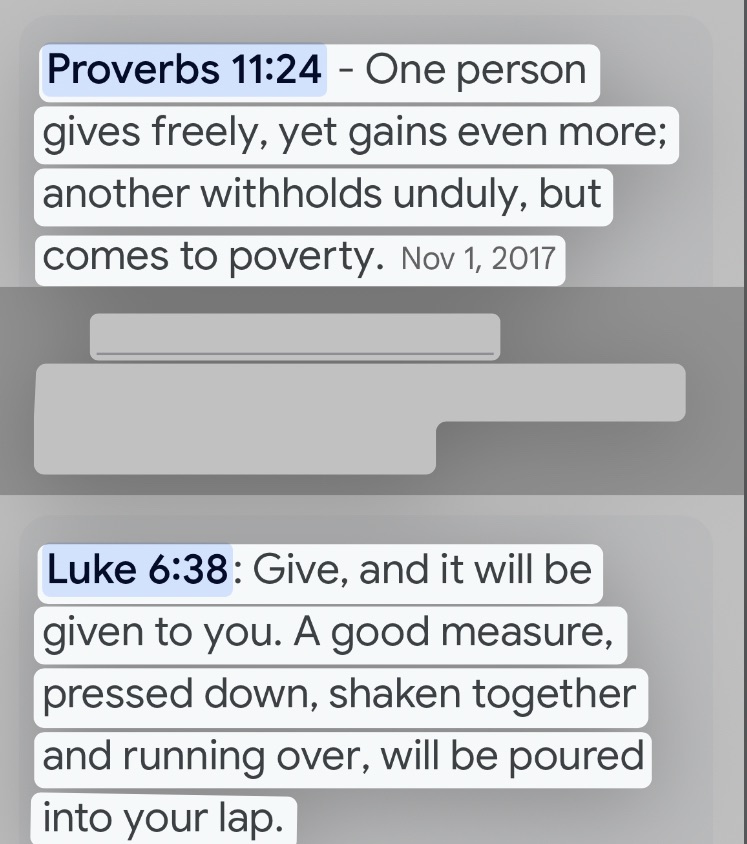
Proverbs 11:24–25 (ESV)
“One gives freely, yet grows all the richer…”
Acts 20:35 (NIV)
“It is more blessed to give than to receive.”
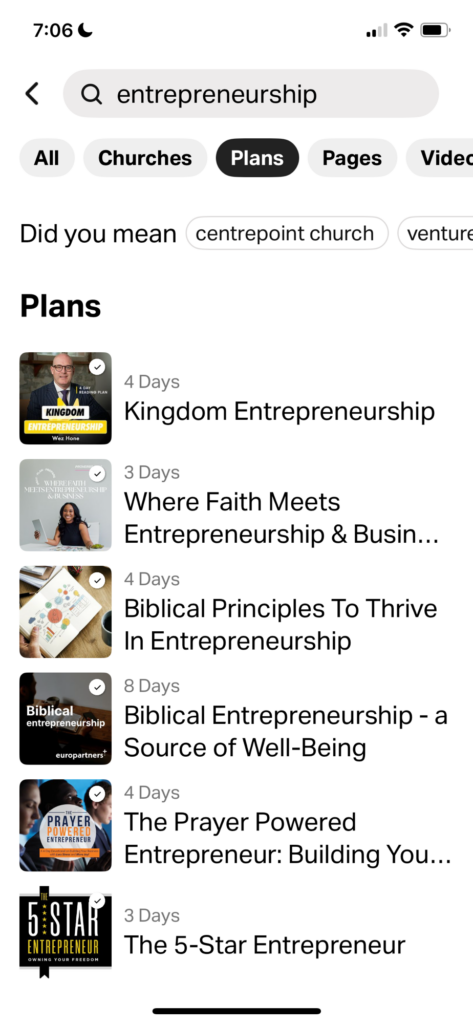
If you’re a Christian in business, I highly recommend searching the Bible app for plans under the word “entrepreneurship.” I’m currently going through all of them! It will look like this –
What other Biblical business principles do you live by? I’d love to know!
1. Download this free app to get the entire picture of your net worth
For the longest time, I only concerned myself with a monthly budget. For one, I didn’t know this amazing free app existed! So I’m sharing it with you. How would I ever reach my financial goals or even know when we were financially set for life if I have no collection of all our assets, liabilities, debts, retirement accounts, real estate, liquid cash, etc? A monthly budget is only able to show a very small part of the picture. This allows me to see the entire picture. You can download it here.
2. Start a “self treats” notes folder on your phone and stop any impulse purchase in its tracks
They say that it’s really hard, nearly impossible to stop a bad habit, like say, impulse purchasing. It’s much easier and more effective to just replace one habit with another. So if impulse purchasing is something you want to stop doing, you can replace the habit with putting your wants into a savable list. I call mine my “self treats” list. It’s on my phone and easily accessible. Anytime I see something I like that someone recommended on tik tok or facebook or a blogger mentioned, I just save it to my “self treats” list. And I save all my “wants” purchases for special occasions like Christmas, my birthday, Mother’s Day, or our anniversary. On my bday, I’ll browse my self treats list and see what I want to buy from there that I’ve saved up all year. Limiting “wants” purchases to special occasions makes it more special and removes the need to impulse purchase. I’m not perfect at this of course, but it does eliminate a lot of would be purchases.
One of my dreams is to be somewhere warm from January-May each year
3. Write a day in the life of and a week in the life of your dream life and then ask ChatGPT to write it with more emotion
This exercise is important because if you don’t even have a why to saving and investing, you won’t be at all motivated to sacrifice in the moment. There has to be a future goal in mind, and it has to be very specific and very clear. Not only that, you have to see it in your mind’s eye and feel the feelings you’d be feeling if you were in fact living that dream life in the moment. That’s why I’m suggesting you ask ChatGPT to edit it and make it more emotional. We don’t make changes because of facts. We have to feel like doing it. You have to feel how you would feel in that dream life to cement moving in that direction.
4. Write another note on your phone called “I know I’ve made it when…” and write a shameless bullet point list of everything that would happen in your dream life
Some of mine for inspiration!
I’ve made it when
I have a driver
I can look for opportunities to give as my hobby
I hire a chef
Nate can retire
I fly to see my brother in New York every year for our birthdays or alternate he comes or I come and we spend 5 days together from Dec 31- January 4 every year as our yearly “regular”
I treat every friend I have to a meal on their birthday
I am someplace warm from Jan-May and in Seattle- June- Dec
I go to hot yoga every other day in the am
I have four hours a day of childcare so I can work
I have an infrared sauna in my backyard that I retreat to every night
I have a membership with Nate and kids at indoor rock climbing
We go snowboarding every winter
If you read lists like this and just feel like nothing you write is even worth writing because it all feels out of reach and just makes you depressed writing it, and you wouldn’t even know where to start, the next two things are just for you!
This was a text I just sent to my friend yesterday when we were talking about money
5. Watch this movie asap so that you can start believing that your dreams are possible
The Secret. And no, it’s not scary. It’s the very opposite of scary.
6. Write a note on your phone or journal called “False beliefs I have about money” and write below “What the reality is”
I was inspired by a friend to do this exercise because she did the exercise and shared her journal with me. Sometimes we have beliefs around money that we don’t even know we have! Some of her beliefs were “I don’t like money. I don’t need money. People who have money are corrupt.” So of course if your beliefs are that you don’t need money, money will not come to you. We get what we believe.
I started digging deeper about my own false beliefs, and I’m just going to share my journal entry with you. As a Christian, I decided the best way for me to find the truth was to search the word. Here are my findings:
Old versus new beliefs about money
Old– It’s hard to make money.
New– It’s not hard or easy to make money. The power of getting or making money is not in my power. It’s in God’s-
Verses–
Deuteronomy 8:17–18
“You may say to yourself, ‘My power and the strength of my hands have produced this wealth for me.’
But remember the LORD your God, for it is He who gives you the ability to produce wealth…”
1 Chronicles 29:12
“Wealth and honor come from You; You are the ruler of all things. In Your hands are strength and power to exalt and give strength to all.”
Old– If I work hard enough, I will make money.
New– Wealth comes from God and it is He who decides who receives it.
Verses–
1 Chronicles 29:14
“Everything comes from You, and we have given You only what comes from Your hand.”
Haggai 2:8
“‘The silver is mine and the gold is mine,’ declares the LORD Almighty.”
Old– I have the power to make or lose money
New– All power to make or lose is in God’s hands. It has nothing to do with what I do.
Verses-
Proverbs 10:22
“The blessing of the LORD brings wealth, without painful toil for it.”
Ecclesiastes 5:19
“Moreover, when God gives someone wealth and possessions, and the ability to enjoy them… this is the gift of God.”
Psalm 24:1
“The earth is the LORD’s, and everything in it…”
Psalm 75:6–7
“No one from the east or the west or from the desert can exalt themselves. It is God who judges: He brings one down, He exalts another.”
7. For further reading, read how God chooses whom to bless with riches (according to scripture)
1. Wealth is Distributed According to God’s Sovereign Will
God gives wealth to some and withholds it from others in ways that reflect His larger purposes, not human worth.
1 Samuel 2:7
“The LORD sends poverty and wealth; He humbles and He exalts.”
Psalm 75:6–7
“Promotion comes… from God; He puts down one and exalts another.”
This means wealth is never purely random or purely earned—God’s sovereignty is involved.
⸻
2. God May Give Wealth as a “Blessing” for Certain Purposes
Sometimes God entrusts wealth to people because He intends to use them as channels of generosity or leadership.
Proverbs 10:22
“The blessing of the LORD brings wealth…”
Examples: Abraham, Job (restored), Solomon (asked for wisdom, received wealth).
But notice: the “blessing” is not always reward—it is sometimes responsibility.
⸻
3. God Gives Wealth to Test the Heart
Wealth is often a spiritual test, not a reward.
Deuteronomy 8:17–18
God warns that wealth can lead to pride, so He gives it “to test you.”
Luke 16:10–12
Those trusted with earthly wealth are tested for faithfulness.
Some people are given wealth to see if they will steward it faithfully, generously, and humbly.
⸻
4. God Sometimes Withholds Wealth for Protection
Scripture also says God may keep someone from becoming rich because abundance would harm their soul.
1 Timothy 6:9
“Those who want to get rich fall into temptation and a trap…”
God’s withholding can be mercy, not punishment.
⸻
5. God Blesses According to His Larger Kingdom Purposes
Wealth is never the primary marker of God’s favor in the Bible. God distributes resources—spiritual and material—based on His plans.
Matthew 25:14–15
The Master gives “each according to his ability.”
Some receive much because they can handle much; others receive little because God has a different calling on their life.
⸻
6. God Gives Riches Partly Through Principles He Established
The Bible teaches practical wisdom that tends to lead to prosperity (though not guaranteed):
• diligence (Proverbs 12:24)
• prudence and planning (Proverbs 21:5)
• righteousness (Psalm 1:3)
But these are principles, not formulas. Some faithful people remain poor (Hebrews 11).
⸻
7. Wealth Is Not Proof of God’s Favor
Scripture warns strongly against assuming rich = blessed or poor = cursed.
Luke 12:15
“A person’s life does not consist in the abundance of their possessions.”
James 2:5
God has “chosen the poor” to be rich in faith.
In many cases, God blesses His people spiritually rather than materially.
⸻
So How Does God Choose?
Putting all of Scripture together:
God gives wealth to whom He wills,
for the purposes He wills,
when it will accomplish His plans
and not destroy the person receiving it.
Wealth is not a measure of someone’s value—it is a tool God assigns selectively for His kingdom, the good of others, and sometimes for testing character.
This is the story of how I completely changed my spending habits and went from spending freely without a budget to having no desire to spend money and spending money as a last resort because that’s what I wanted.
I have to start this off by saying that these changes kind of had to happen because of a bad investment, but I was determined to not just change my spending behaviors but change my complete mindset about spending.
I wanted to want to not spend.
Here what I did-
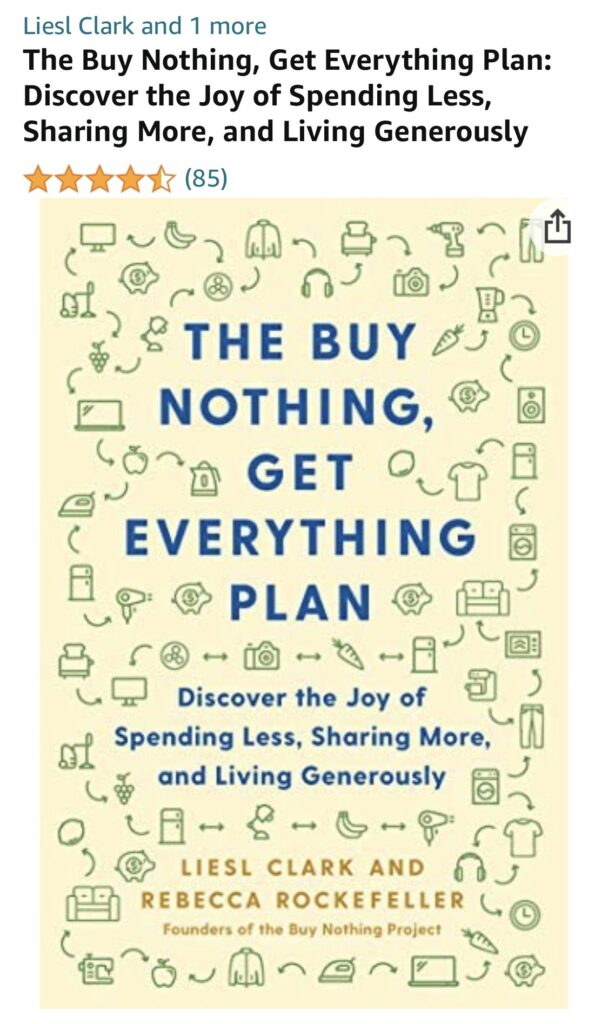
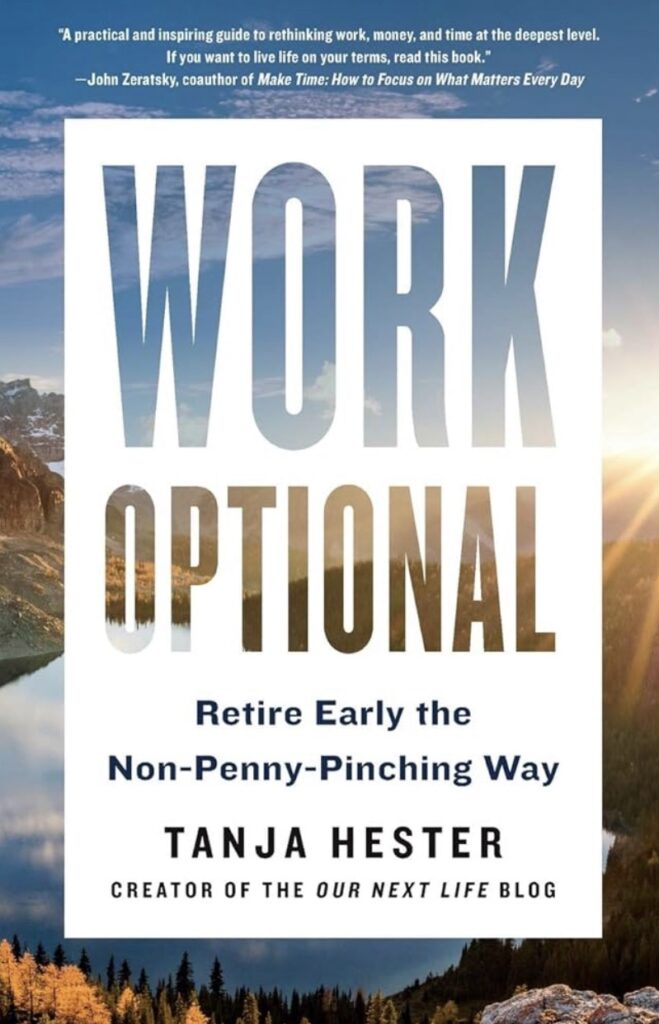
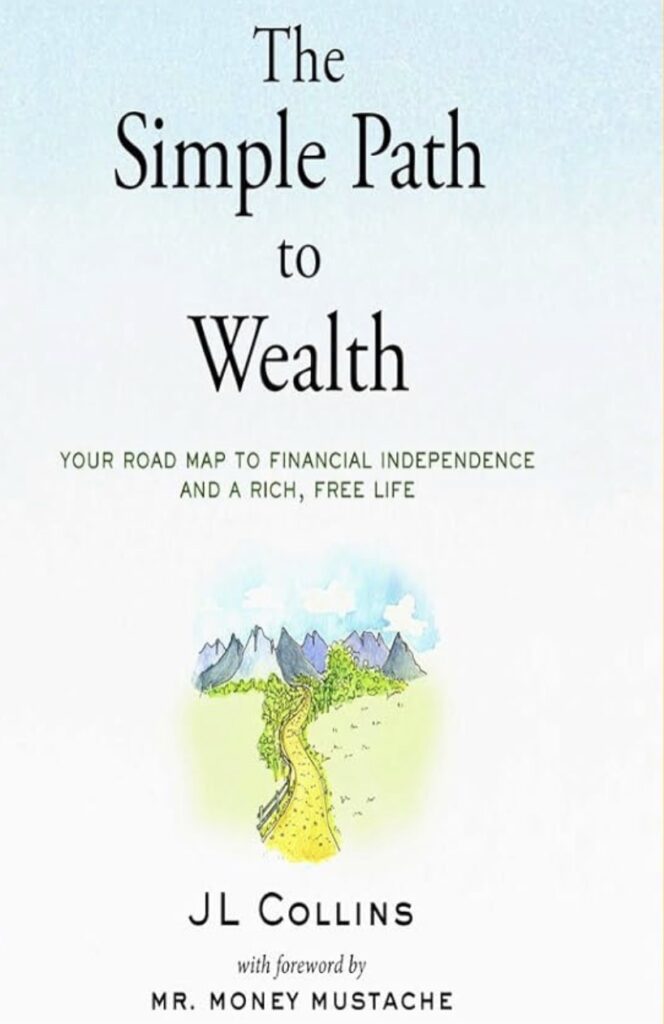
1. I read this life changing book from cover to cover
Everything started with this book. I highly recommend it to anyone who’s trying to change their financial path and is looking to want to spend less as a complete mindset shift. See, the problem as humans isn’t always that we don’t know what to do or how to make positive changes. The problem is sometimes that we lack the motivation to do the right things. This book is that motivation.
2. I watched these two Netflix documentaries
With the book mentioned above, my motivation started shifting, but as with bad habits, (like mindless or impulse spending) it’s much easier to replace a bad habit than to change a bad habit. So with these two documentaries, I started shifting my desire to spend to my desire to invest and give.
Major takeaways were that –
Most people spend on things they like and want, but the dream life is spending on things you need and love.
That means dropping that impulse purchase I saw on tik tok for yet another highlighter (like) or that mindless home decor purchase I saw just innocently walking through Target (want) and instead making sure we paid our electricity this month (need) and putting aside money for my dream infrared sauna (love).
It’s deciding what things really make for your rich life (for me massages) and not spending much or anything on things that don’t really matter to you. (for me, fancy haircuts, getting my nails done professionally, a gym membership, traveling, beauty treatments, makeup, new clothes).
3. I started a buy as the last resort principle and tried to only shop buy nothing groups or think of resourceful ways to get what I wanted/needed.
If you haven’t looked into it yet, I highly recommend joining your local buy nothing group on Facebook. It’s a freely give, freely take community. It’s easy, simple, and most gifted items are just porch pick up- you don’t even have to turn off your car or meet anyone. These groups have saved us thousands and thousands of dollars.
My boys are 7 and 10 years old and I have never had to buy them shoes, clothes, or jackets because I started saving every size from buy nothing gifts up to size 16 since they were born. I’m not exaggerating! I’ve gotten exercise machines, weights, a crib, a sofa bed, toys and so many other things from this group. I’ve also given many items. It’s easier than doing a goodwill drop off! They come pick up the items!
If I wanted or needed something, I would spend days, even weeks trying to think of resourceful ways to get the item I needed. For a long time I used a mannequin to store my jewelry because that’s what we had laying around. I only recently switched to a jewelry box that was gifted to me. It was the act of stopping and pausing and taking time between the moment I wanted something to the time I actually purchased the item that made a big difference. No more impulse buys! It became like a game to see how I could get the item without buying it!
4. I started shopping my own closet and joining round robins
For ladies this will be huge. Basically, anything you’re not wearing currently in your closet, you just go on Pinterest and type in the item- “red and white striped tank” and add the word “outfit” to the end- “red and white striped tank outfit” and then you get ideas on how to style the unused item and see if you have any of those combos in your closet!
I also started joining buy nothing round robins for more clothing. This is where you have a thread on the buy nothing group where anyone who wants clothes your size or has clothes your size would join the thread, lets say a “women’s size medium round robin,” and then it just goes through each person, you take what you want and add what you want until it goes through all the people on the thread.
5. I started tracking everything every week without fail
I’ve tried Mint, I’ve tried YNAB, but for someone who is not a number’s person, the every dollar app was a God send. You take every purchase and just slide the bubble into the right category. Easy peasy.
I put it in my weekly to do list to go through my budget because there’s just so much to keep track of, and if I did it once every month or every two weeks etc, the amount of purchases and bills would just be overwhelming. Once a week has proven to be manageable.
The point is to just see where everything is going. At one point we were spending $3k a month on eating out and groceries! I never would have known this unless I tracked it!
6. I started only eating out for special occasions
They say that people tend to spend the most on housing, transportation, and food, so if you can cut out any spending in these three areas, you’re likely to make a bigger impact in your ability to save, give, and invest than you otherwise would targeting another expense group like let’s say “pets.”
So, I started getting really black and white about going out to eat. We would do our very best to only eat out on a special occasion. It’s never perfect, but it’s been a great goal to aspire to, and when we do eat out, it feels extra extra special!
7. I stopped “budgeting” and became ruthless about “last resort spending”
One positive thing about being an all or nothing person is that it’s much easier for me to abstain than it is to be moderate. If you want to make a major financial change in a shorter amount of time, you want to be ruthless! You can dramatically change your financial situation in a smaller amount of time if you stop budgeting and adopt a last resort spending mentality. Basically I’ve gone on a permanent spending freeze unless it’s something I really need or love or something to be generous to someone else.
It meant I guarded my free time.
This meant if I was going to meet up with a girlfriend, my recommendation would be to have them over for a meal or a YouTube weight lifting session or go for a hike or a swim in the lake, not invite them out to eat or out for drinks.
This meant hosting potluck game nights instead of suggesting we meet up at a restaurant.
This meant no more let-me-hop-into-Target-since-I-have-free-time because it was guaranteed that I’d leave there having purchased something.
8. I read books to increase my financial literacy
One thing I realized is that it’s very difficult and nearly impossible to “save” your way into wealth. You have to invest it. These books above plus the two Netflix documentaries mentioned earlier all had this recommendation in common- Index Funds
So we started investing in index funds! It cuts out the money managers that take a huge percentage, so that you don’t lose out on hundreds of thousands of dollars on commissions throughout the life of your investment. There are many great ones pout there, but we love Fidelity Zero. Zero fees!
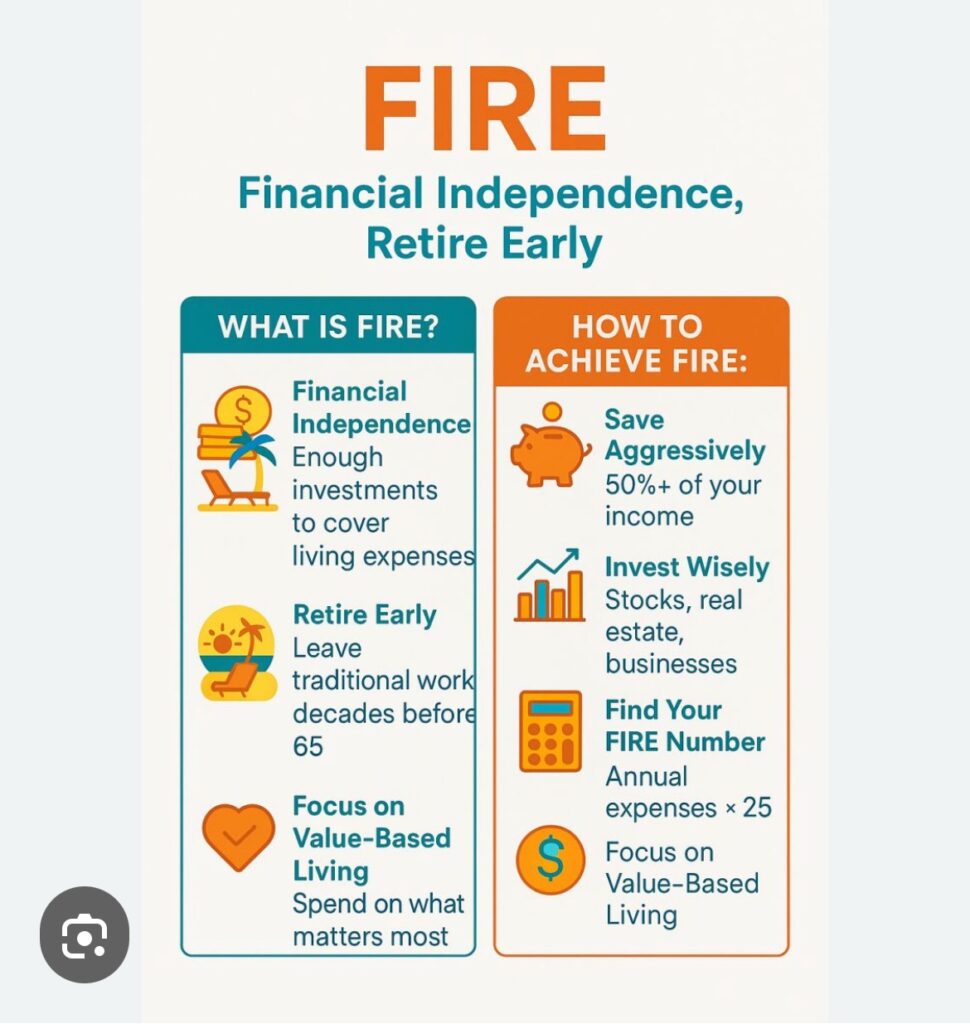
9. We started focusing on F.I.R.E goals which stand for “Financial independence retire early.”
Not that the goal is to stop working, but to have the freedom to make lifestyle choices based on our family’s values, goals, and desires and not on a paycheck. I want the freedom to live the kind of lifestyle we’d want at retirement, but sooner so we can spend more time with our kids, family, and friends before age and health become a barrier.
In traditional retirement, aka the “budgeting” camp, they are asking you to save and invest 15% of your earned income. In the F.I.R.E camp, the goal is 50%. Sacrifice now to enjoy the benefits sooner rather than later.
10. In all our ruthless saving and investing, we reminded ourselves that the point of it all was generosity.
We want to be generous with others in the present and in the future. We want to be frugal with our present selves so we can be generous with our future selves.
The point of it all is so that we don’t become a burden to others and so that richly we are blessed, richly we can give!
Ultimately, the way I believe the world works is that generosity begets abundance.
The unwritten rules of the universe say that if you withhold from helping someone, you too will be withheld from receiving help. And it sounds counterintuitive, but the more you give away, the more you actually gain.
The point of our frugality with ourselves is so that we can be generous with others and generous to our future selves.
11. I found there was more joy in creating than consuming
If you’re a Christian also, you too believe that we were created in God’s image. He is a creator, and we too like Him, find the creative process satisfying! I dabble in a lot of things creative that keep me busy creating instead consuming. I too fall into the trap of mindless browsing, but creating never makes me feel bad the way mindless scrolling and spending do.
What I’m saying is that by fulfilling that God-given role of creator, I feel less of a need to consume because I’m so busy creating. Hope that makes sense and also rings true for you on this journey.
12. I kept myself out of harms way
Like I mentioned earlier, you know you’re not going to go to Target on your free time without walking out having bought something, so don’t even go!
That’s what I started to do. I stopped going to places that made me automatically spend money.
When I scrolled Tik Tok, I wouldn’t even stop on any posts that said “sponsored post” or “creator earns commission.”
I don’t hardly even go to thrift stores unless it’s an outing suggested by my friend to go with them.
Keep yourself away from temptation.
13. I reminded myself that the best things in life are free anyway
Friendship, love, kisses from my kids, cuddles from my dog, an invigorating hike with a view done with my dog and a friend, play dates that include hot tea and laughter, moving my body and sweating to get endorphins, walking into a warm ocean, watching a spectacular sunset, getting into crisp sheets after a shower, playing board games with my family on a random Tuesday, pouring my heart out to my hubby in bed after lights are out, forest bathing, sitting outside and letting the sun hit my face, grounding on warm summer grass, singing and harmonizing with my siblings over the piano, sex, taking a nap, going for a swim, finding a new magazine or book at the library, etc etc etc.
This is my list. I recommend you make a list that’s specific to you. And I’d love to know what’s on your list!
These 13 things really did make my spending unrecognizable by 2025. Do you have any saving or money hacks? I’d love to know!
This website uses cookies and similar technologies for advertising and analytics.
Learn more.